
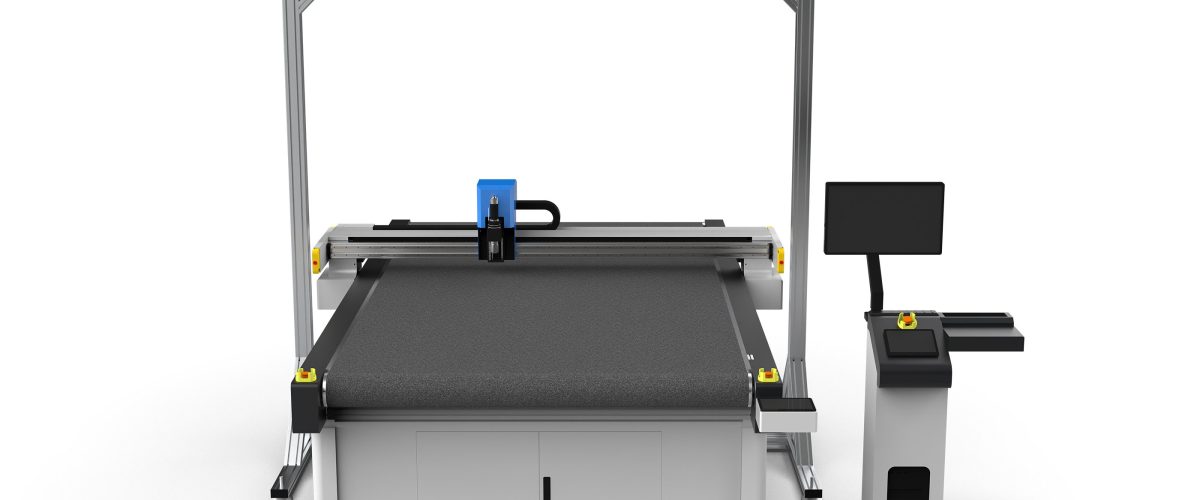
What is a KT board sample making machine?
A KT board sample making machine is a CNC device dedicated to cutting KT board (a lightweight board composed of a polystyrene foam core and surface coating), widely used in advertising signage, displays and exhibitions, packaging prototyping, and architectural models. It controls the tool path via computer to achieve high-precision, high-efficiency profile cutting, hollowing, and kiss-cutting operations, replacing traditional manual cutting and significantly improving prototyping accuracy and consistency.
Compared with laser cutting machines, the KT board sample making machine uses mechanical tool cold cutting, avoiding the material edge melting, yellowing, and odor issues caused by high laser temperatures, making it especially suitable for display props and packaging samples that require high edge quality. At the same time, the equipment can be equipped with various tools (such as oscillating knife, drag knife, round knife, V-shaped knife) to meet the processing needs of different thicknesses and patterns.
Core Types and Working Principles of KT Board Proofing Machines
1. Flatbed Proofing Machine
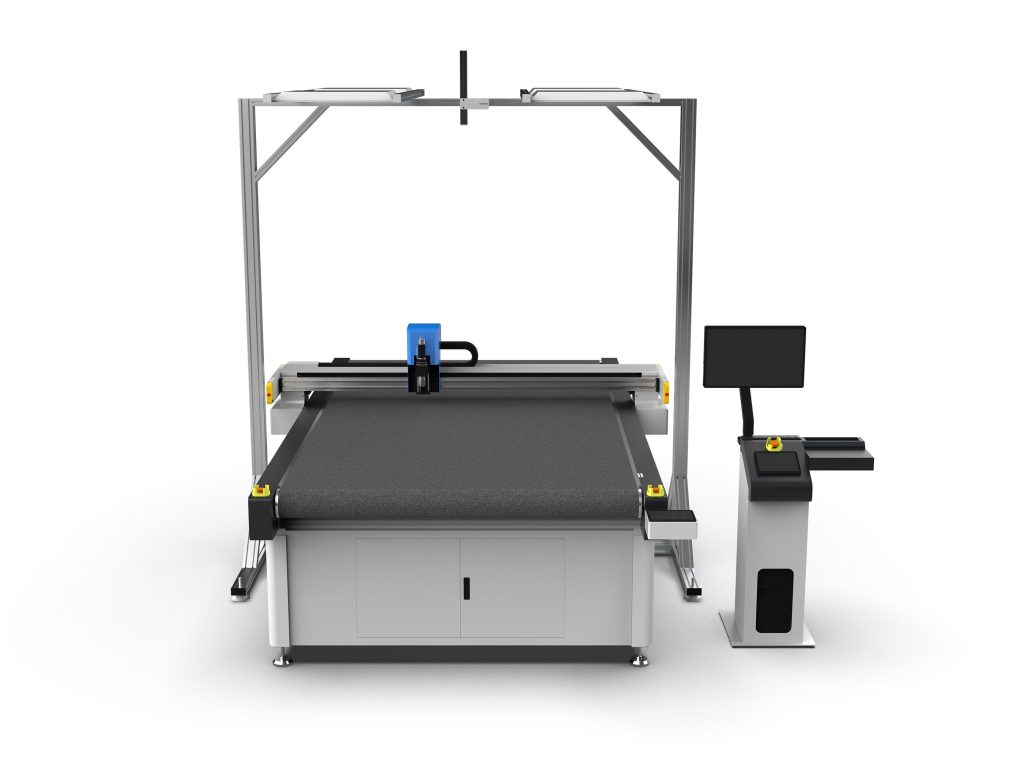
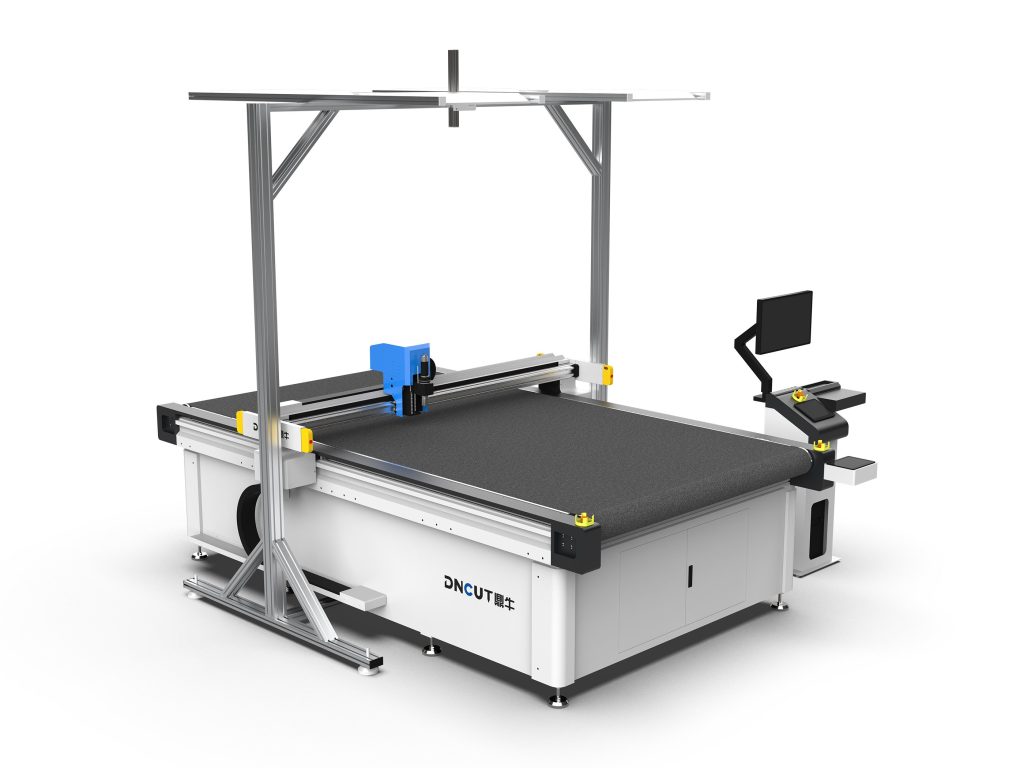
The flatbed model uses a vacuum adsorption platform to secure materials, with the cutting head moving in the X-Y directions, suitable for large-format, single-sheet, or small-batch production. Typical working areas are 1300mm×2500mm, 1600mm×3000mm, etc., with larger sizes customizable. The vacuum pump power is usually 5.5kW~7.5kW, ensuring thin boards do not shift during high-speed cutting.
2. Oscillating Knife Cutting Machine
The oscillating knife cuts materials through high-frequency up-and-down vibration (frequency can reach over 10,000 times per minute), with good cut-edge perpendicularity, suitable for KT boards with a thickness of 5mm~30mm. The oscillating knife can be paired with blades of different angles (such as 0°, 15°, 30°) to achieve fine pattern and narrow slit cutting.
3. Drag knife cutting machine
Drag knife cutting relies on the tip dragging to cut, suitable for thin KT board with thickness ≤5mm. The cutting speed is fast, but the cut edge is slightly beveled, suitable for liners or temporary displays that do not require high verticality.
4. Circular knife cutting machine
The circular knife cuts through a rotating blade, suitable for straight lines and large-format curves. The cutting speed is high, but the turning radius is limited, commonly used for simple rectangles or large arc graphics.
Analysis of Key Performance Parameters
When purchasing a KT board proofing machine, the following parameters need to be focused on:
- Cutting accuracy: Repeat positioning accuracy should be ≤0.05mm, with cutting accuracy within ±0.1mm, ensuring accurate splicing and assembly.
- Maximum cutting speed: Idle speed can reach over 60m/min; actual cutting speed is adjusted based on material thickness and pattern complexity, typically 10~30m/min.
- Vacuum adsorption method: Vacuum adsorption with zone control, independently switchable, adapting to materials of different sizes and saving energy.
- Tool configuration: Supports at least oscillating knife, drag knife, V-shaped knife, and pen tool, facilitating marking and kiss-cutting during sampling.
- Control system: Compatible with mainstream CAD/CAM software (such as AutoCAD, CorelDRAW, Illustrator), supports DXF, PLT, AI and other formats, with a user-friendly interface.
- Table surface material: Aluminum alloy table or felt table; the former is durable, the latter protects the knife tip, selectable according to budget.
How to choose the right KT board proofing machine
1. Clarify processing requirements
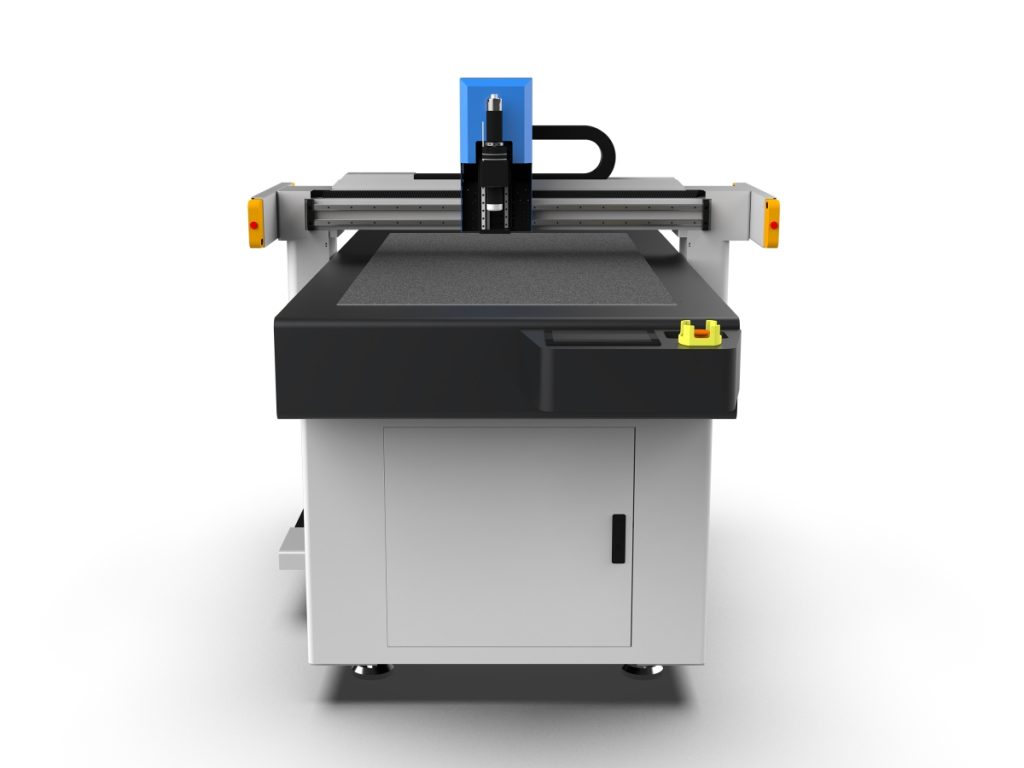
Determine the equipment working area based on common KT board thicknesses (typically 3mm, 5mm, 8mm, 10mm) and maximum dimensions. Advertising companies often choose 1300mm×2500mm, while packaging proofing can use a small 600mm×900mm machine. If multiple materials such as honeycomb board and corrugated paper are involved, a multi-functional model should be selected.
2. Examine cutting quality
On-site trial cutting is key. Observe whether the cut is smooth, free of burrs, and has good verticality, especially in small text and sharp corner areas. The edges of KT board cut by oscillating knife should be neat, with no foam debris falling off.
3. Evaluate production efficiency
Compare the actual cutting speeds of different brands. Pay attention to the acceleration parameter (usually 0.5~1.5G); high acceleration can reduce idle travel time. For batch orders, an automatic feeding system can improve efficiency.
4. Software and after-sales service
Ensure the equipment comes with easy-to-use layout software that supports automatic path optimization. Understand the supplier’s installation training, warranty period, and spare parts supply capability, and give priority to brands with local service outlets.
5. Budget and cost-effectiveness
The price range of domestic flatbed proofing machines is approximately 30,000 to 150,000 RMB, while imported equipment can reach over 200,000 RMB. Choose according to business volume and avoid over-configuration. Pay attention to the long-term cost of consumables (blades, table surface).
Operating Tips and Common Problem Solutions
1. Material Fixing
Before cutting, ensure the KT board surface is clean and the vacuum adsorption force is uniform. For warped boards, press them flat with weights or use clamps. The adsorption zones should be activated according to the material size to avoid air leakage that reduces adsorption force.
2. Tool Selection and Adjustment
When using the oscillating knife to cut KT board thicker than 5mm, the blade tip extension length should be slightly greater than the board thickness (about 0.5mm) to avoid incomplete cutting or scratching the table. When drag knife cutting thin boards, the knife pressure should not be too high to prevent material deformation. Check blade wear regularly and replace in time.
3. Cutting Parameter Optimization
Adjust the cutting speed and feed speed according to material thickness. Use low speed for thick boards (e.g., 10m/min), and increase to 20m/min for thin boards. For fine patterns, reduce acceleration to minimize corner errors. It is recommended to test-cut a small sample first and confirm the parameters before mass production.
4. Common Issues and Solutions
- Burrs at the cut edge: The blade is dull or the speed is too low; replace the blade or increase the oscillating frequency.
- Material displacement: Insufficient vacuum suction; check the sealing strip and suction zone settings, or add auxiliary fixtures.
- Incomplete cutting: The blade tip protrudes insufficiently or the knife pressure is insufficient; adjust the tool depth and pressure.
- Graphic size deviation: Check the tension of the drive belt or the lubrication of the guide rail, and perform accuracy calibration.
Maintenance Key Points
Clean the table and guide rails daily to remove foam debris; check the vacuum pump filter weekly and clean off dust; lubricate the linear guide rails and lead screws monthly and check belt tension; calibrate cutting accuracy quarterly and replace worn table pads. When idle for long periods, release the knife and disconnect the power, and take dust-proof measures.
Application Scenarios and Cases
KT board proofing machines are used in advertising companies to make display stands, POP posters, and exhibition panels; in packaging enterprises for rapid proofing to verify structural designs; and in the architectural model field for cutting terrain and facades. For example, an advertising production company used a 1300mm×2500mm oscillating knife proofing machine to shorten the proofing time for irregular display panels from 2 hours by hand to 15 minutes, improving accuracy to ±0.1mm and significantly increasing customer satisfaction.
Summary
The selection of a KT board proofing machine requires comprehensive consideration of processing needs, cutting quality, efficiency, and after-sales service. Proper use and maintenance of the equipment can extend its lifespan and ensure proofing quality. As the advertising and packaging industries see growing demand for personalization and short lead times, CNC proofing machines have become a key tool for enhancing competitiveness.