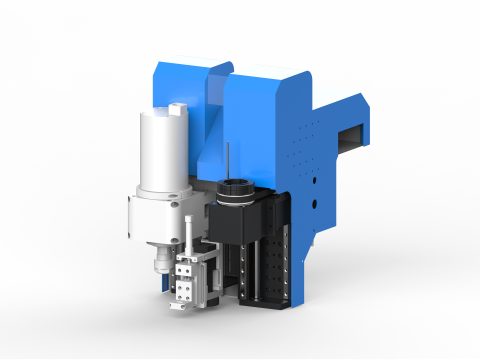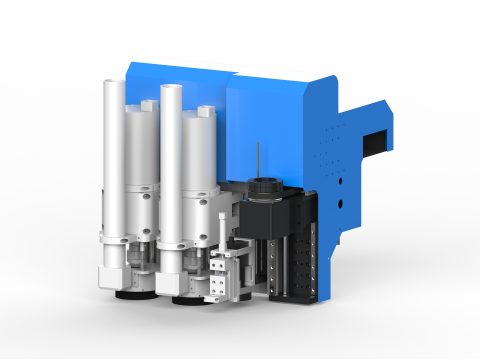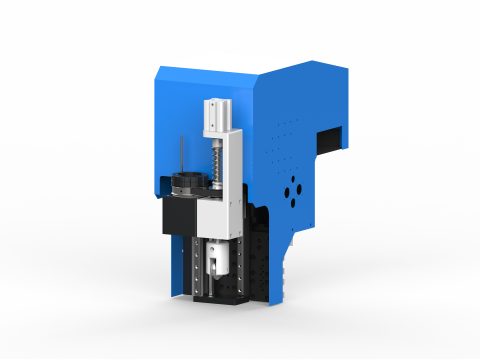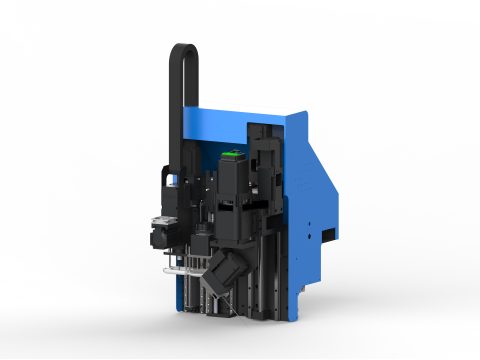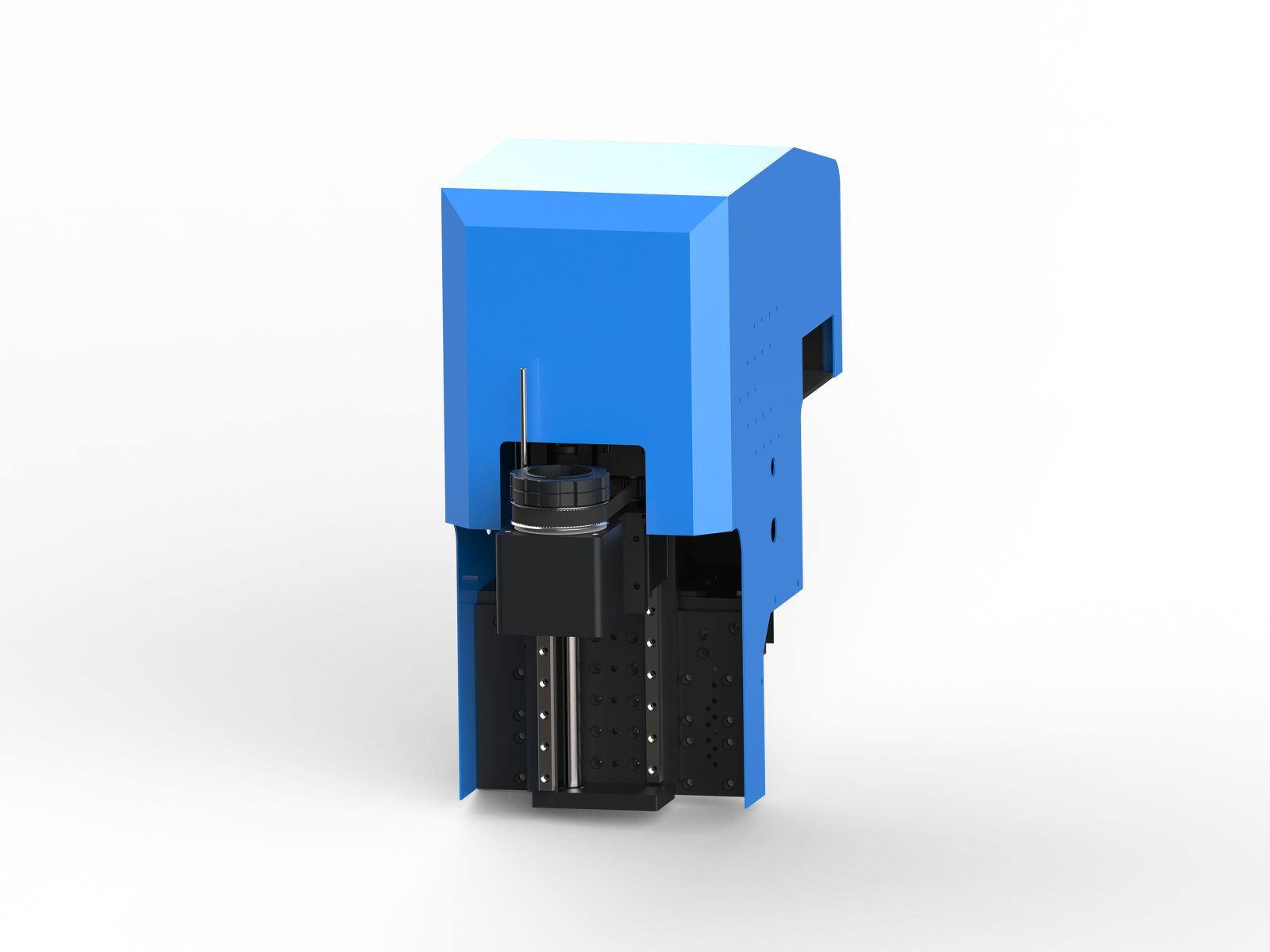
The A-type head combination is a cutting head that modularly integrates a standard single-tool holder with a CCD vision positioning pen, achieving precise contour cutting of printed patterns through visual recognition.
The A-type head combination adopts a modular configuration of a standard single-tool holder paired with a CCD vision positioning pen, assembled from modules such as the tool holder, oscillating knife (or drag knife), CCD camera, and positioning pen. Its core lies in integrating visual recognition and general cutting into the same head: the CCD camera automatically recognizes the contour features of printed patterns and corrects the cutting path in real time, so that the knife path precisely follows the pattern edges, thereby solving the problems of misalignment and incomplete cutting caused by registration deviation when contour cutting printed materials, while the single-tool holder retains quick-change tool capability, covering both conventional cutting and vision positioning processing needs.
Core Features
- CCD vision automatic alignment: The camera recognizes printed pattern contours and corrects the cutting path, eliminating manual piece-by-piece alignment for contour cutting and reducing registration errors.
- Single-tool holder with quick-change tools: The same tool holder can quickly change between oscillating knife, drag knife, and other tools, with one head covering both general cutting and fine contour cutting conditions.
- Positioning pen for assisted calibration: Works with the CCD to complete marker point recognition and coordinate calibration, making it easy to quickly restore the positioning reference after material changes.
- Oscillating knife low-damage cutting: The oscillating knife cuts downward with high-frequency micro-amplitude vibration, producing clean cuts on printed surface layers and thin materials while reducing edge indentation and burrs.
- Modular on-demand expansion: The head reserves module interfaces for later addition of components such as rotary punches and inkjet heads according to process needs, protecting equipment investment.
Applicable Materials and Industries
This combination is suitable for color-printed cardboard, trademark hangtag paper, adhesive labels, cardstock, thin corrugated board, and some film materials, and is especially suited for workpieces with pre-printed patterns that require contour cutting. Typical application industries include color-printed packaging, trademark hangtags, label printing, advertising display products, and paper product post-processing scenarios.
Selection and Configuration Recommendations
When the processing object is mainly printed finished products and needs to be cut along pattern contours rather than fixed shapes, this combination is preferred; if subsequent drilling or inkjet marking is required, circular punches and inkjet head modules can be added on this basis. In terms of supporting equipment, it is recommended to pair with a roll feeding or sheet feeding platform to ensure stable feeding, and to select cutting control software that supports CCD vision alignment and tool path compensation, so that the vision recognition results are linked with the cutting path, fully leveraging the contour cutting capability of this head combination.
Key Technical Parameters
- Head Model: A-type (head combination)
- Processing Height: 60mm (standard)
- Combination Configuration: Single tool holder + CCD pen
- Replaceable Modules: Tool holder / oscillating knife / servo oblique cutting knife / circular punch / spindle / CCD vision component / inkjet head (optional according to model support)
- Applicable Materials: Fabric, leather, foam, EVA, composite materials, cardboard, acrylic, wood board, etc. (depending on the selected module)
- Applicable Processes: Contour cutting, punching, creasing, grooving, milling, vision positioning cutting, inkjet marking (depending on the selected module)
- Applicable Models: Dncut oscillating knife cutting machine series (head board customized and installed according to model)
- Remarks: The head can be customized and combined according to materials and processes; the specific configuration is subject to the selection plan
FAQ
What is the CCD vision positioning accuracy of the A-type head combination?
The CCD vision positioning accuracy can reach ±0.1mm, which can accurately identify printed pattern contours and correct the cutting path.
What materials can this head combination cut?
It is suitable for color-printed cardboard, adhesive labels, card paper, thin corrugated board and some films, with a thickness of 0.1-5mm.
Which blades does the single blade holder support?
It supports oscillating knife, drag knife, etc. Blade change time is less than 30 seconds, meeting both general and fine cutting needs.
How to expand with circular punch or inkjet head modules?
The machine head has reserved module interfaces, allowing circular punch, inkjet head and other components to be added as needed for the process, plug and play.
Further Reading
- Key points for vacuum adsorption and air circuit system maintenance of oscillating knife cutting machines
- Dingniu successfully exhibited at the 25th China International Leather Exhibition with continuous on-site signings
- The new energy vehicle interior market drives continued growth in oscillating knife cutting demand
The core advantage of the A-type machine head combination lies in integrating visual recognition and general cutting functions into the same module, reducing equipment footprint and production line changeover time. Traditional contour cutting requires manual alignment or a separate vision system, whereas this combination uses a CCD camera to capture the contour features of printed patterns in real time, combined with control software for tool path compensation, keeping the deviation between the cutting path and the pattern edge within ±0.1mm. For industries with high registration requirements such as color-printed packaging and trademark hangtags, this accuracy can significantly reduce scrap rates and improve material utilization.
When selecting a model, users need to determine whether to prioritize this combination based on the main processing materials and process requirements. If the processing object is mainly printed finished products and requires cutting along pattern contours rather than fixed-shape cutting, this combination is the best choice. If punching or inkjet marking functions need to be added later, the module interface reserved on the machine head can be used to expand with a circular punch or inkjet head, avoiding duplicate investment. In terms of supporting equipment, it is recommended to pair with a roll or sheet feeding platform to ensure stable feeding, and to choose cutting control software that supports CCD visual alignment and tool path compensation, so that visual recognition results are linked with the cutting path, fully leveraging the contour cutting capability.
For maintenance and care, the CCD lens needs regular cleaning to prevent dust from affecting recognition accuracy; it is recommended to wipe it with special lens paper every shift. The calibration cycle of the positioning pen is usually 500 hours or adjusted according to usage frequency. The calibration method is simple and can be completed with a standard calibration board. The oscillating knife blade is a wear part, and depending on the cutting material, its lifespan is between 8-12 hours; timely replacement ensures cut quality. In addition, the machine head module interface should be kept dry and clean to prevent dust accumulation from causing poor contact. Following these maintenance points can extend the service life of the machine head combination and maintain stable cutting accuracy.