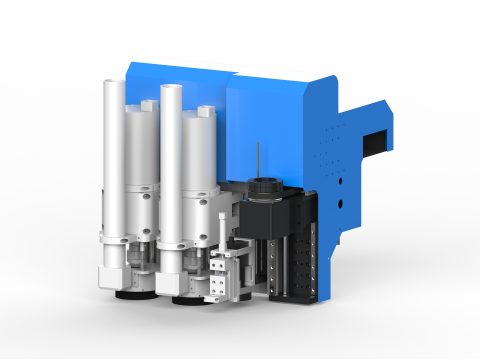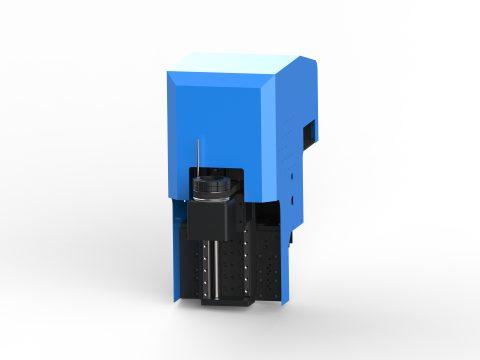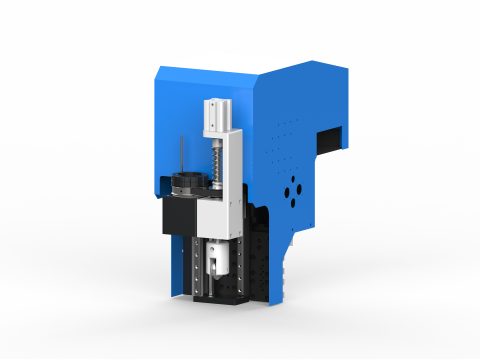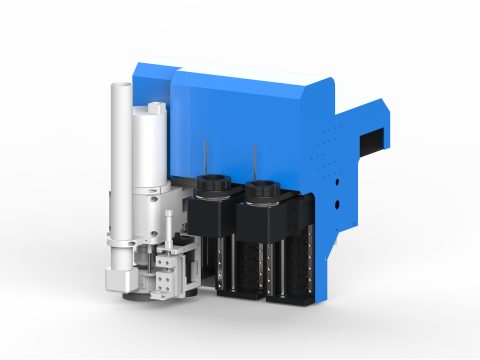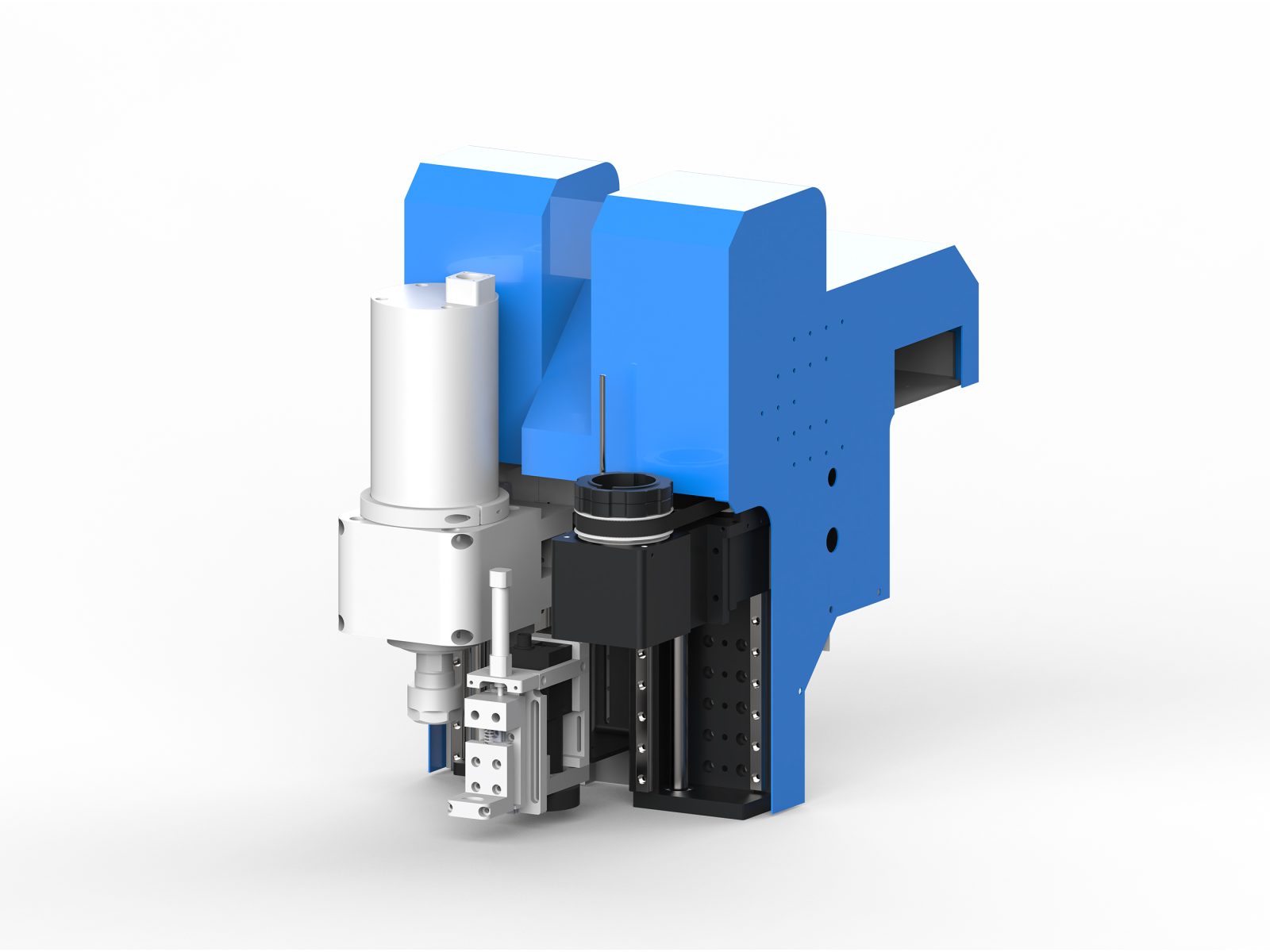
The EA-model head combination is assembled from three major modules: the spindle, the single knife holder, and the CCD vision pen. It is a modular head configuration solution for hybrid processes. The spindle handles hard material operations such as engraving, slotting, and milling; the single knife holder handles conventional oscillating knife cutting; and the CCD vision pen uses a camera to recognize printed contours and correct the cutting path in real time. Working together, the three can complete continuous operations on the same machine, from printed pattern recognition and contour cutting to local milling forming, reducing errors and labor time caused by multiple setups and machine changes. It is suitable for composite processing scenarios with high registration accuracy requirements.
Core Features
- Spindle hard material processing capability: The spindle module can perform processes such as engraving, grooving, and milling. It has good cutting adaptability for hard plates and thick materials, making up for the limitations of pure knife cutting on hard materials.
- Single tool holder conventional cutting: The single tool holder is equipped with tools such as an oscillating knife and undertakes conventional contour cutting tasks. Tool changes and adjustments are simple, making it suitable for stable batch cutting operations.
- CCD vision alignment correction: The CCD camera identifies printed marks or contours on the material surface and automatically corrects cutting path deviations, improving alignment consistency in die-cutting of printed products.
- Multi-module collaborative operation: The spindle, tool holder, and vision components work together in process sequence to complete recognition, cutting, and milling within a single setup, reducing process flow.
- Modular on-demand configuration: Each module of the machine head uses modular interfaces, allowing configurations to be added or removed based on order structure, facilitating subsequent process expansion and maintenance replacement.
Applicable materials and industries
This combination is suitable for processing scenarios that require both print registration and hard material forming. Common materials include sign boards, acrylic, gift box cardboard and greyboard, printed packaging cardstock, adhesive labels, and some composite panels. Typical industry applications cover sign making, gift boxes and premium packaging, printed packaging die-cutting, advertising signage, and small-batch custom processing, etc. It is especially suitable for orders where printed patterns and cutting contours need to correspond precisely.
Selection and Configuration Recommendations
The spindle power of this combination is 2.2kW, which, combined with different tools, can meet the common power requirements for grooving, engraving, and hard board cutting.
If the processing requirements involve both printed contour registration cutting and local engraving, slotting, or milling, the EA model head combination is a more suitable choice; for scenarios mainly consisting of single soft material straight cutting, the configuration can be simplified. In terms of supporting equipment, it can be used with automatic feeding platforms, roll or sheet feeding systems, and paired with cutting software featuring visual calibration and path compensation functions to leverage the advantages of CCD registration and multi-module collaboration.
Key Technical Parameters
- Head Model: EA model (head combination)
- Processing Height: 60mm (standard)
- Combination Configuration: spindle + single knife holder + CCD pen
- Spindle power: 2.2kW
- Interchangeable modules: knife holder / oscillating knife / servo angle knife / circular punch / spindle / CCD vision component / inkjet head (optional depending on model support)
- Applicable materials: fabric, leather, foam, EVA, composite materials, cardboard, acrylic, wood board, etc. (depending on the selected module)
- Applicable processes: contour cutting, punching, creasing, grooving, milling, vision-positioned cutting, inkjet marking (depending on the selected module)
- Applicable models: Dingniu oscillating knife cutting machine series (machine head board customized and installed according to model)
- Note: The machine head can be customized and combined according to materials and processes; the specific configuration is subject to the selection plan
FAQ
What materials is the EA model machine head combination suitable for?
Suitable for sign boards, acrylic, gift box cardboard and grey board, printed packaging cardstock, adhesive labels, and some composite boards, especially for scenarios requiring print registration and hard material forming.
How does the CCD vision pen improve cutting accuracy?
The CCD vision pen uses a camera to identify printed marks or contours on the material surface, automatically correcting cutting path deviations. The alignment accuracy can reach ±0.1mm, ensuring that the cutting contour precisely corresponds to the printed pattern.
Can this combination perform both engraving and cutting simultaneously?
Yes. The spindle handles engraving, grooving, and milling, the single-knife holder handles conventional cutting, and the CCD vision pen assists with alignment. Working together, the three can complete multiple processes within a single setup.
What are the advantages of the modular design?
The modular interface allows configurations to be added or removed according to order requirements, facilitating process expansion and maintenance replacement, reducing equipment upgrade costs, and improving production flexibility.
Further Reading
- How much does an oscillating knife cutting machine cost? Tiered pricing and configuration list
- Key maintenance points for vacuum adsorption and pneumatic system of oscillating knife cutting machine
- Why are more and more factories replacing manual cutting with oscillating knives?
The core advantage of the EA model head combination lies in integrating hard material processing and vision-aligned cutting on the same platform. The spindle module uses 1.5kW of power and can engrave and mill acrylic and signboard materials up to 10mm thick, while the single tool holder paired with the oscillating knife enables high-speed contour cutting. The addition of the CCD vision pen raises the alignment accuracy of printed material die-cutting to ±0.1mm, effectively reducing material waste. This multi-process integration is particularly suitable for small-batch, multi-variety customized orders, allowing users to complete the entire process from recognition to forming without frequently changing equipment.
When selecting a model, users need to determine the configuration based on the main processing materials and process requirements. If the primary focus is die-cutting for printing and packaging, a CCD vision pen and a single knife holder are essential configurations; if engraving and grooving of hard plates are involved, a spindle module needs to be selected as an option. The modular interface design allows for later expansion, reducing initial investment risk. In terms of supporting equipment, it is recommended to pair with an automatic feeding platform and cutting software with visual calibration capabilities to fully leverage the advantages of CCD alignment and multi-module collaboration. Regular maintenance of the CCD lens and spindle tool can maintain long-term stable processing accuracy.
From the perspective of application scenarios, the EA model head combination performs outstandingly in sign making, gift box packaging, advertising signage, and other fields. For example, in gift box production, after the CCD vision pen recognizes the printed pattern, the single knife holder completes contour cutting, and the spindle can groove or mill local parts of the box body, completing all processes in a single setup and reducing errors from multiple positioning. For die-cutting of printed packaging cardboard, the vision alignment function can compensate for material stretching and deformation, ensuring that the cutting line precisely matches the printed pattern. As demand for personalized customization grows, this flexible and efficient head combination will become the mainstream configuration for multi-process equipment.