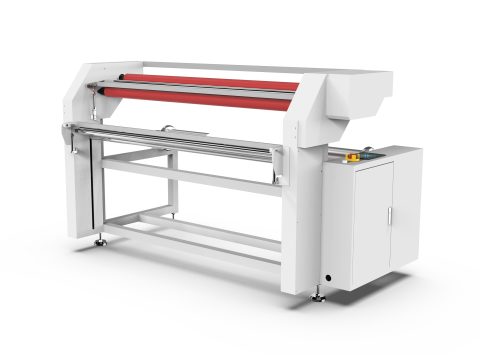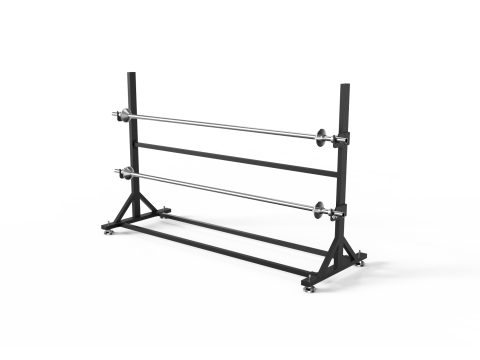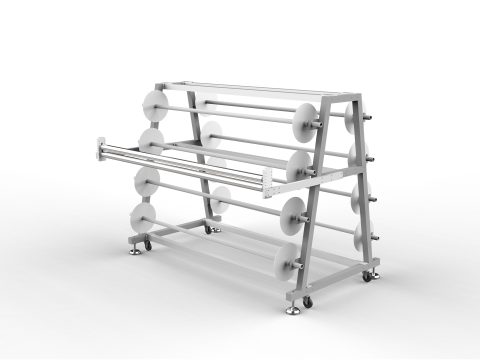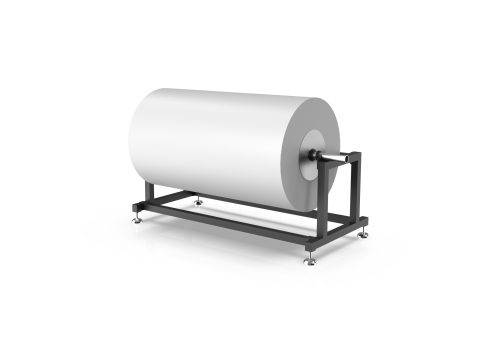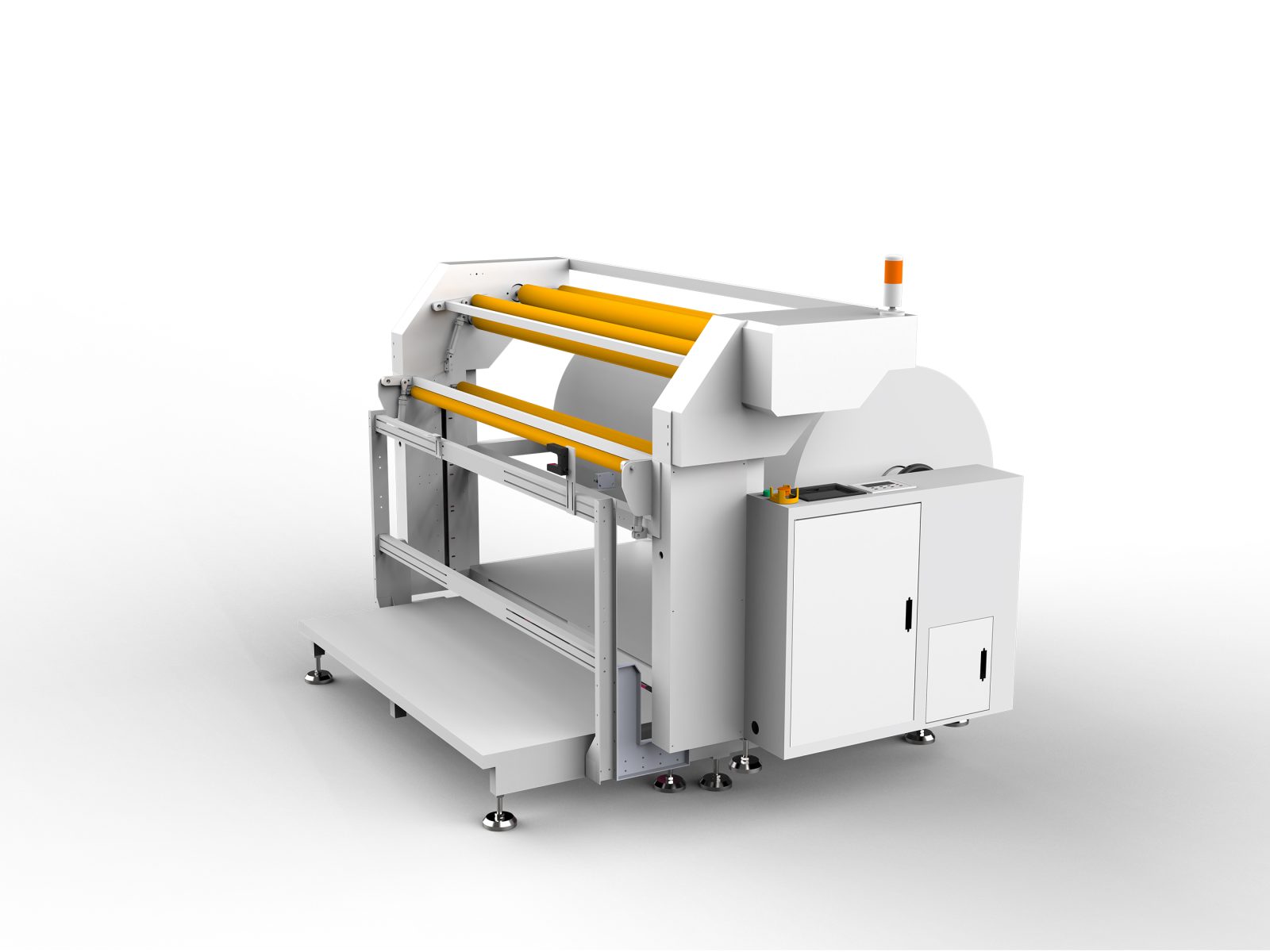
DN-PJ028 Powered Feeding Rack (with deviation correction) is an auxiliary device used for active unwinding and stable feeding of roll materials. It mainly solves problems such as deviation, wrinkling, and poor feeding caused by tension fluctuations, roll diameter changes, or installation deviations during the unwinding process. The device uses power drive for active unwinding and integrates an automatic deviation correction mechanism, so that the roll material maintains relatively stable tension and centering before entering cutting, slitting, or forming processes. It is suitable for processing scenarios that require feeding accuracy and continuity.
Core Features
- Powered active unwinding: Uses power drive instead of passive pulling, making the unwinding process smoother and reducing sudden tension changes caused by the weight and inertia of the roll material.
- Automatic deviation correction control: Equipped with deviation detection and actuator mechanisms, it can correct the lateral position of the roll material in real time, reducing the probability of deviation and uneven edges.
- Stable feeding tension: Adjusts tension according to roll diameter changes and feeding speed, helping the roll material maintain a relatively consistent tension state when entering downstream equipment and reducing wrinkles.
- Strong structural adaptability: Can adapt to the unwinding needs of roll materials with various roll diameters and widths, making it easy to form a continuous production line with cutting, slitting, and other equipment.
- Convenient operation and maintenance: Deviation correction and unwinding parameters can be adjusted according to material characteristics. Daily maintenance mainly consists of routine inspections, making it easy for on-site operators to get started quickly.
Applicable Materials and Industries
This feeding rack is suitable for various roll materials, including plastic film, paper, non-woven fabric, composite film, adhesive tape, foam, metal foil, and some flexible sheets. Common application industries include packaging and printing, paper product processing, plastic flexible packaging, non-woven products, adhesive products, and electronic material slitting. It is especially suitable for continuous processing stages where roll materials need to maintain centering and stable tension after unwinding.
Selection and Matching Suggestions
When selecting a model, it is recommended to match based on the maximum working width of the roll material, roll diameter range, single roll weight, and feeding speed, and to confirm the correction sensitivity and tension adjustment range according to material thickness and surface characteristics. When pairing with cutting equipment, it is advisable to prioritize cutting machines, slitting machines, or die-cutting machines with speed linkage or signal interface capabilities, so that the feeding rack and downstream equipment remain synchronized during start/stop and speed adjustment, thereby better leveraging the correction and stable tension effects. For thin or wide roll materials prone to deviation, the correction response requirements can be appropriately increased and installation space reserved.