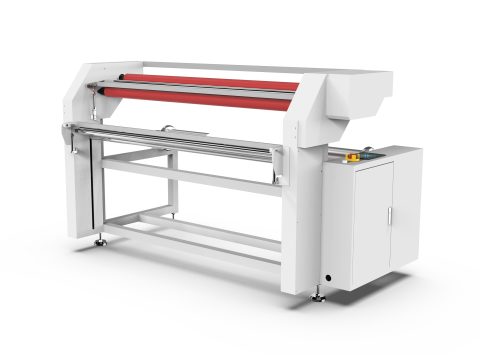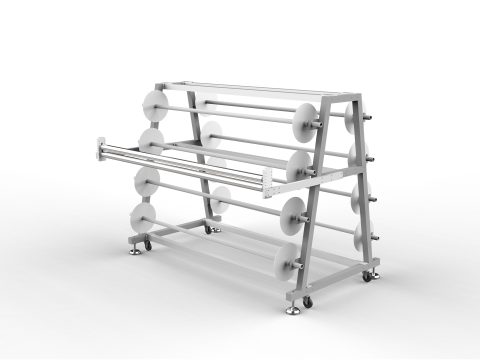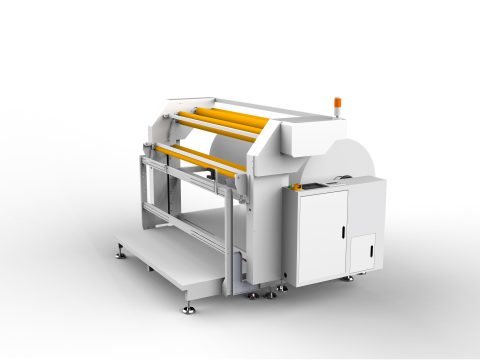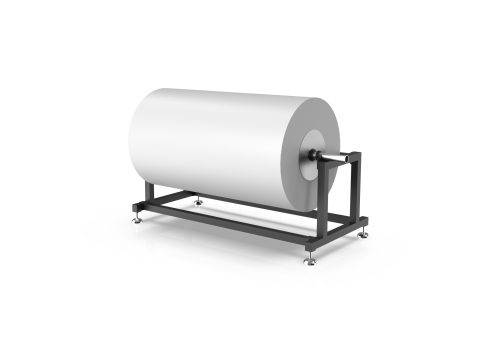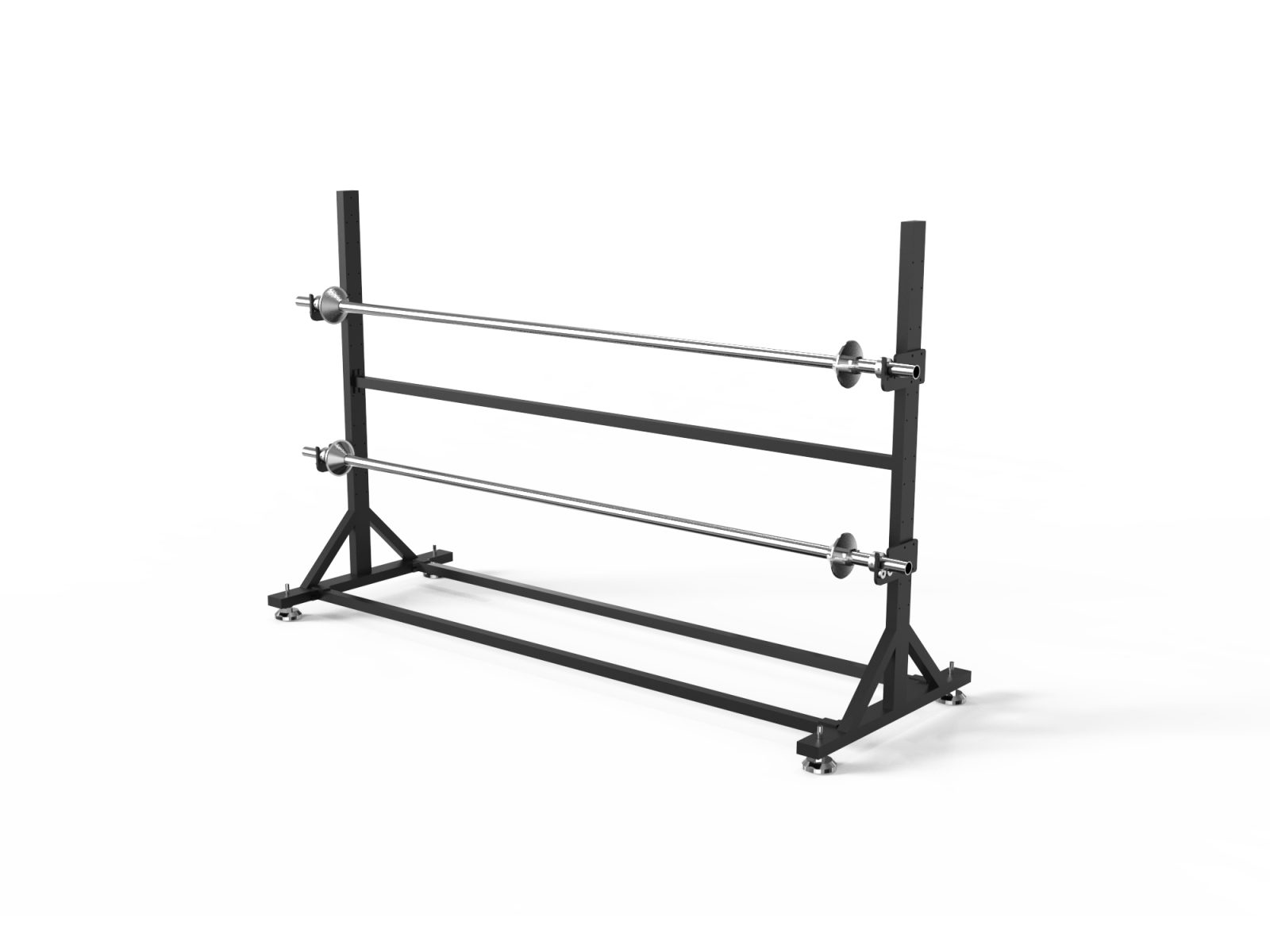
The DN-PJ010 dual-roll feeding rack is a two-station unwinding device designed for continuous processing of rolled materials. It is mainly used to solve the problems of frequent downtime for roll changes during single-roll feeding and low efficiency in switching between multiple product types. The equipment is equipped with two roll stations on the same frame and can load two rolls of material at the same time. When the current roll is about to run out, it switches to the standby roll to achieve alternating feeding, enabling downstream processes such as cutting and trimming to keep running continuously. It is particularly suitable for production scenarios with many order varieties and high roll-change frequency.
Core Features
- Dual-station alternating feeding: The two roll shafts carry loads independently. While one roll is working, the other roll can be prepared for loading, and switching is quick during roll changes, significantly reducing downtime and waiting time.
- Smooth roll-change transition: Station switching is simple to operate and coordinates with the feeding rhythm of downstream equipment, reducing material web interruptions and the number of re-threading operations caused by roll changes.
- Suitable for multi-variety production: The two stations can be loaded separately with rolls of different specifications or materials, facilitating flexible scheduling for small-batch, multi-variety orders and reducing the burden of frequently replacing entire rolls.
- Stable unwinding tension: Equipped with a tension control mechanism to keep material web tension stable during roll diameter changes, reducing deviation, wrinkling, and loose winding.
- Compact structure and easy operation: The frame layout is reasonable, with sufficient space for roll loading and threading. Daily inspection and maintenance are convenient, and it can be integrated into existing production line layouts.
Applicable Materials and Industries
This feeding rack is suitable for various flexible and semi-rigid materials supplied in roll form, including plastic film, paper and paperboard, non-woven fabric, woven fabric, foam, adhesive tape, aluminum foil, and some composite rolled materials. It is widely used in the unwinding and feeding stages of industries such as packaging and printing, paper product processing, non-woven products, automotive interiors, die-cutting of electronic auxiliary materials, advertising consumables, and general industrial roll cutting.
Selection and Matching Recommendations
When selecting a model, it is recommended to first confirm the maximum outer diameter of the roll, the inner diameter of the core, the weight of a single roll, and the range of material width, and to match the shaft type and load capacity accordingly; at the same time, combine this with the feed speed and tension requirements of downstream equipment to confirm whether the unwinding control method meets the process requirements. When matching cutting equipment, it is recommended to give priority to a cutting machine, die-cutting machine, or slitting machine equipped with an automatic feeding interface, so that the feeding rack and the host machine work in coordinated rhythm; for production lines with high roll-changing frequency, the dual-station switching can be linked with the host start/stop logic to further leverage the efficiency advantage of alternating loading.